
Rhyme or Reason: Part 4
by Mary Dawson
If you've been rhyming things for a while now, you may have heard somewhere along the way that the only word in the English language that can't be rhymed at all is the word orange.While that statement may be completely true (personally, I've never even found a Near Rhyme for the word, orange) you may one day find yourself with a word or line to rhyme that's nearly as impossible. In this installment of our study, we'll examine some alternative rhyme patterns that will give you creative options to use when you need contrast...or when you simply get stuck with a word that's darn hard to rhyme.
In the first three segments (Part 1, Part 2 and Part 3) of this series we've been examining the various aspects of Rhyme -- from the evolution of acceptable rhyming words over the last Century to the very important matter of line rhymes or rhyme schemes. In our last session we focused on two of the real 'staples' of lyric rhyme patterns:
When you become comfortable with these basic rhyme patterns, you can begin to add some "variations to the theme." Let me emphasize again how essential it is to study great songs and songwriters. When you purchase a CD, take out the CD insert and really study the lyrics. Write or type them out yourself. Watch the craftsmanship of the lyricists and learn from them. You can also take advantage of the many lyric websites that allow you to study rhymes and rhyme patterns in depth.The Simple Couplet - made up of two successive rhymed lines having the same lyrical cadence and forming a unit. The Quatrain - a rhyming unit made up of four lines rather than two. We studied two basic quatrain patterns, the 2/4 Quatrain where the second and fourth lines rhyme; and the Odd/Even Quatrain in which lines one and three rhyme -- as well as lines two and four.
The 3/1 Quatrain
One very effective variation of the quatrain is the 3/1 Quatrain. In this rhyme pattern the first three lines rhyme while the fourth line does not. This is an especially effective rhyme scheme for highlighting the hook/title in the non-rhyming line to make it stand out and be memorable. (It's also a great way to use a hard-to-rhyme word like orange by placing it in the fourth line which doesn't need to rhyme with the other three.)
Let's take a few minutes to study the 3/1 Quatrain as used by hit Country songwriter, Vince Gill, in his song, "Never Knew Lonely". Due to copyright restrictions, we can't print the lyrics here but you can find them online here.
If you are a Country Music fan, you will no doubt remember this beautiful song. It has a simple, memorable melody with the hook/title appearing at the end of each verse and at the end of the chorus. Using the 3/1 Quatrain Vince rhymed the first three lines of the verses and ended with the hook/title in the one non-rhyming line where it provides contrast and makes the hook stand out. It also coincides with the beautiful melodic hook so that once you have heard this song, you will always remember its simple but haunting melody and lyric.
Here's another variation of the 3/1 Quatrain pattern. This is one of my own lyrics for a Christian Contemporary song called "Pray and Watch"1, written with composer Bruce Greer. The verse combines two 3/1 Quatrains, but in this variation, the non-rhyming lines of each quatrain rhyme with each other to make the entire verse more interesting and cohesive.
First Quatrain:When I got to the chorus, I changed the rhyme pattern completely to make the chorus contrast and to make the hook/title stand out. Here's the chorus:
Jesus asked His friends to stay
By His side to watch and pray
As He struggled to obey
At any cost
Second Quatrain:
They were willing for His sake
But they could not stay awake
Til they learned to watch and pray
Then pray and watch
Chorus:Notice that the first two lines are a couplet, while the last four lines are an Odd/Even Quatrain. Are you beginning to see the possibilities for 'mixing and matching' rhyme patterns to create interest?
Pray and watch when your in your darkest hour
Pray and watch - God will give you grace and power
When a mountain's in the way
Or a battle must be fought
Just watch and pray
Then pray and watch
Now let's study another impeccably crafted lyric. The song is "What Are You Doing the Rest of Your Life?" -- written by master songwriters Alan and Marilyn Bergman and Michel LeGrand. If you are not familiar with this song, you owe it to yourself to download it from iTunes and allow yourself to be swept away by its beauty. It's been recorded by dozens of major artists. My personal favorite is Michael Crawford's version.
This song is in the AABA song form, so it has no chorus. In fact, the hook/title only appears once in the first line of the first verse, so it really doesn't fit the technical definition of a lyrical hook/title, which demands that it be repeated. What makes this song "work," however is its haunting, repeated, chromatic musical hook at the beginning of each A section and the 3/1 Quatrains which comprise the lyric in each A section. In the B or "bridge" section the rhymes change to couplets but return to the 3/1 Quatrain for the final A and the "coda" or ending section that has a slight melodic variation. Notice also that the fourth lines of the last two quatrains rhyme with each other as in Pray and Watch above.
You can view the lyrics here.
"What Are You Doing the Rest of Your Life?" is the kind of song every songwriter should dissect and study in depth. Take it apart like a fine Swiss watch. Notice the interesting vocabulary words, the fresh images and the emotional depth of these lyrics. Hold yourself up to this standard of excellence as you practice, practice, practice!
Six-Line Rhyme Scheme
So far, we've been focusing on two-line rhymes (couplets) and four-line rhymes (quatrains), but how about upping the ante a little and going for a six-line rhyme scheme? One of my favorites is the 1-2-3 Six Line Pattern. This is how it works:
The first three lines don't rhyme with each other at all. Each line has a different ending word. But then, lines four, five and six parallel lines one, two and three in end sounds so that lines one and four rhyme, two and five rhyme and three and six rhyme.Here's an example from the first verse of a song I wrote some years ago (again with composer Bruce Greer) called "Above the Clouds."2
For days it had been raining (Line 1)Then I added a couplet to form an eight-line verse:
As I stepped aboard the plane (Line 2)
Another long, hard trip at last was done (Line 3)
Commuters were complaining (Line 4 rhymes with Line 1)
About the endless rain (Line 5 rhymes with Line 2)
Til we took off through the clouds into the sun (Line 6 rhymes with Line 3)
Then I laughed because I'd half forgotten what I know
That whatever the weather is like down below...
And the chorus used the 2/4 Quatrain combined with internal word rhymes within the lines to complete the idea:
CHORUS:I hope you're starting to get the idea that there are endless creative and fresh rhyme patterns that can be used to make a song interesting and memorable. We can by no means exhaust the many possibilities in this series of articles. What all this means for you, the aspiring lyricist, however, is that you must discipline yourself to s-t-r-e-t-c-h beyond the old familiar rhyme schemes, study great lyricists and attempt new and challenging patterns. There only way to learn is to do!
Above the clouds the sun is shining, Baby
Above our blues, it's blue
A canopy of gray may hide the sun away
But you and I can learn to fly right through
On wings of love we'll fly above the clouds
If you write both words and music yourself, try to complete an entire lyric first before you add the melody. Plan to combine several rhyme patterns to strategically add contrast and lift in the chorus -- or wherever the hook/title appears. If you are a lyricist only, a well-crafted lyric with proper cadence and rhyme will make good composers seek out your lyrics.
The story goes that when Rogers and Hammerstein were writing their famous musicals together, Oscar Hammerstein (the lyricist) would work long and hard for days -- or even weeks -- to make his lyric "just right" before he would let Richard Rogers (the composer) see his work. Rogers would take the painstakingly crafted lyric, put it on the music stand of the piano and, in minutes, he would finish it with a beautiful melody. Hammerstein would get a little miffed because he had worked so hard on the words, while the music seemed to come so quickly. Rogers' response was: "Oscar, your lyrics just write themselves."
That is the challenge. That is the "high bar" of lyric writing. Aim high!
1 Pray and Watch / Words and Music by Mary Dawson and Bruce Greer Copyright 1992 / CQK Music / All Rights Reserved
2 Above the Clouds / Words and Music by Mary Dawson and Bruce Greer Copyright 1992 / CQK Music / All Rights Reserved
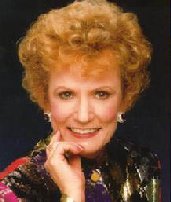 **From her earliest childhood years writing simple songs and poems with her father, through her twelve years as an overseas missionary, to her present, multi-faceted career as an author, lyricist/songwriter and conference speaker, Mary has always been adept at using words to communicate her heart to others. She is the President of CQK Records & Music of Dallas, Texas, a company which creates and produces songs in a panorama of musical styles for a variety of audiences, She is also the host of "I Write the Songs," a nationally syndicated radio talk show, especially created to inspire and instruct the more than 25 million aspiring songwriters in the U.S. "I Write the Songs" is broadcast over the Internet. Mary is a frequent public speaker and seminar lecturer on songwriting. She is a regular columnist for Independent Songwriter Web Magazine. Mary's commitment to discovering and mentoring talented new songwriters has given her extensive experience in song analysis through adjudicating songwriting competitions and conducting songwriting workshops across the country and around the world. Because of her role as president of an independent music company, she is also well qualified to instruct aspiring songwriters on the various
business aspects of the music industry. She is married and a mother of four. She resides in the Dallas area.
**From her earliest childhood years writing simple songs and poems with her father, through her twelve years as an overseas missionary, to her present, multi-faceted career as an author, lyricist/songwriter and conference speaker, Mary has always been adept at using words to communicate her heart to others. She is the President of CQK Records & Music of Dallas, Texas, a company which creates and produces songs in a panorama of musical styles for a variety of audiences, She is also the host of "I Write the Songs," a nationally syndicated radio talk show, especially created to inspire and instruct the more than 25 million aspiring songwriters in the U.S. "I Write the Songs" is broadcast over the Internet. Mary is a frequent public speaker and seminar lecturer on songwriting. She is a regular columnist for Independent Songwriter Web Magazine. Mary's commitment to discovering and mentoring talented new songwriters has given her extensive experience in song analysis through adjudicating songwriting competitions and conducting songwriting workshops across the country and around the world. Because of her role as president of an independent music company, she is also well qualified to instruct aspiring songwriters on the various
business aspects of the music industry. She is married and a mother of four. She resides in the Dallas area.