
Storytelling
by Robert Lacey
|
The first history book that I remember reading with pleasure was a stout, blue, exuberantly triumphalist volume, Our Island Story - A History of England for Boys and Girls by H. E.Marshall. It had a red and gold crested shield embossed on the cover, and it told tales of men, women and often children whom it dared to describe as "heroes" and "heroines." It was accompanied by a companion volume, Our Empire Story, which was still more politically incorrect, relating the sagas of the heroes and heroines who adventured "across the seas" to paint much of the globe pink. I must confess that I loved it still more - even though I discovered, at the beginning of the second chapter, that the author had a vivid imagination.
John Cabot's ship the Matthew was described by Marshall as sailing out from Bristol harbour one bright May morning in 1497, "followed by the wishes and prayers of many an anxious heart...until it was but a speck in the distance." Old H. E. - who, I later learned, was an Edwardian lady, Henrietta Elizabeth, living and writing in Australia - was clearly not aware that the port of Bristol is several muddy miles inland from the Bristol Channel. As a pupil at Clifton National Infants School, a few hundred yards from the Bristol docks, I could have told her that if there had been a crowd waving goodbye to Cabot in 1497, they would have lost sight of the doughty mariner as he tacked round the first corner of the Avon Gorge.
It was my first lesson in the imperfections of history. There may be such a thing as pure, true history - what actually, really, definitely happened in the past - but it is unknowable. We can only hope to get somewhere close. The history that we have to make do with is the story that historians choose to tell us, pieced together and handed down, filtered through every handler's value system and particular axe that he or she chooses to grind.
In fact, I was never that disillusioned by H. E.Marshall's mistake. I was in thrall to the tales that she told - and in our postmodern age it could even be considered healthy to have realised that I was reading not the truth, but someone else's imperfect version of it. "History" and "story" derive from the same linguistic root, and if history can never escape its authorship, it should at least try to make the authorship readable and bright.
Unlike English, maths, and science, history is not in the core curriculum of British schools. You can give it up at fourteen, and the minority of pupils (around ? per cent) who do choose to study history at GCSE and A level are not taken through every reign and century of their country's development.They are offered an episodic menu of currently fashionable topics that are considered "relevant" - Nazi Germany and Soviet Russia feature prominently under this heading. In fact, the apparently obscure subject of English medieval history would present students with material of much more relevance - the growth and principles of our freedoms, law and Parliamentary system, not to mention the buildings, towns, and countryside that help define our sense of who we are. It would also introduce them to some extraordinary personalities.
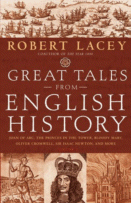
Heroes and heroines are judged to have had their day. The un-teaching of history concentrates on "themes" rather than personalities. But personality - human nature - is surely the essence of history, and I have deliberately made personalities the essence of this book. Brief though each chapter is, Great Tales seeks to create a coherent, chronological picture of our island story, while following the guiding principle that all men and women have heroism inside them - along with generous and fascinating measures of incompetence, apathy, evil and lust. This volume makes a start on the history of England. Later will follow the great tales of Ireland, Scotland, and Wales - which may, or may not, add up to an overall anthology of Great Britishness. There are more and richer dimensions to life than nationality, but our sense of community does rest inescapably upon the stories that we recall from our past.
Making due allowance for the Avon Gorge factor, all the tales in these pages are true. I have consulted the best available contemporary sources and eyewitness accounts, and I record my thanks in the acknowledgements to the many historians on whose modern research I have drawn. But telling stories that are "true" does not exclude England's legends - the romances of King Arthur, Hereward the Wake, or Robin Hood. You will find them examined here as myths that illustrate a truth about the age from which they spring - while also revealing how we today like our Englishness to be. This book seeks to illuminate, but also to entertain, and looking back at Our Island Story, I find that H. E.Marshall was similarly inspired. In her foreword, she asked her young readers not to be too cross with her when they grew up, read "serious" history and discovered the difference between her beguiling narrative and the less riveting messiness of reality.
"Remember," she wrote, "I was not trying to teach you, but only to tell a story."
Published with permission of the publisher.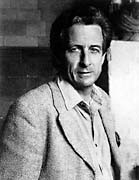 **Robert Lacey is a British historian noted for his original research, which gets
him close to - and often living alongside - his subjects. He is the author of numerous
international bestsellers.
**Robert Lacey is a British historian noted for his original research, which gets
him close to - and often living alongside - his subjects. He is the author of numerous
international bestsellers.
After writing his first works of historical biography, Robert, Earl of Essex and Sir
Walter Ralegh, Robert wrote Majesty, his pioneering biography of Queen Elizabeth II.
Published in 1977, Majesty remains acknowledged as the definitive study of British
monarchy - a subject on which the author continues to write and lecture around the
world, appearing regularly on ABC's Good Morning America and on CNN's Larry King Live.
To research The Kingdom, a study of Saudi Arabia published in 1981, Robert and his wife
Sandi took their family to live for eighteen months beside the Red Sea in Jeddah. Going
out into the desert, this was when Robert earned his title as the "method actor" of
contemporary biographers.
In March 1984 Robert Lacey took his family to live in Detroit, Michigan, to write
Ford: the Men and the Machine, a bestseller on both sides of the Atlantic which
formed the basis for the TV mini-series of the same title, starring Cliff Robertson.
Robert's other books include biographies of the gangster Meyer Lansky, Princess
Grace of Monaco and a study of Sotheby's auction house. He co-authored The Year
1000 - An Englishman's World, a description of life at the turn of the last
millennium.
With the publication of his Great Tales Robert Lacey returns to his first love - history.