
Songwriters Anonymous - Part Four
by Mary Dawson
Christmas decorations are going up and there is a definite spirit in the air. It makes me reach for my favorite Christmas recordings. They never fail to get me in the mood to celebrate the Holidays.But for many years I -- like many others -- never gave a passing thought to where these wonderful songs came from. They were just part of Christmas, like tinsel, gift wrap and shopping. As I began to take my own songwriting more seriously, however, I found myself becoming curious about Christmas songs and songwriters. Several years ago I did a study on the writers and stories behind some of some of our favorite Christmas carols and found it personally fascinating (see "Stories Behind the Carols").
Since we have been on a relentless search in this series to discover "the greatest songwriters you've never heard of," I thought it might be appropriate to attend a Christmas meeting of Songwriters Anonymous and hear a couple fascinating stories behind the songs that contribute so much to our Christmas cheer.
Rudolph the Red-Nosed Reindeer
I believe the first Christmas song my oldest son ever attempted was this childhood favorite. I can still remember him toddling towards the low hanging decorations on our Christmas tree singing at the top of his lungs, "Woodof the Wed-Nosed Weindeew." For decades this song has been one of the most popular of all Christmas songs -- especially for children. But the writers behind this song certainly did not plan it to be a chart topper. On the contrary, this famous Christmas tune was born out of struggle, pain, lots of soul searching and just plain serendipity.
In 1935, Robert May was a humble employee of the Montgomery Ward Company in Chicago, working as a writer in the advertising department. He, as well as the rest of the country, had just survived the Great Depression. But even though things may have been looking up for the nation as a whole, the future didn't look so bright for Robert May. His wife was dying of cancer and Robert knew that soon he would be on his own with his four-year-old daughter, Barbara. He was also facing major financial debts due to his wife's illness. He felt overwhelmed by his circumstances and often succumbed to bouts of depression -- a condition he had battled most of his life.
Born in 1905, Robert had a quick mind, but was very small in stature. He was often the object of ridicule from his classmates. His sense of low self-esteem dogged him even after he graduated Phi Beta Kappa from Dartmouth some 20 years later. Now, at age 34, he was again battling his sense of inadequacy as his personal problems mounted.
As the 1939 Holiday Season approached, Robert's boss asked him to write an "animal story for kids" that could be distributed by Santas through all 600 Montgomery Ward stores. He was offered $300 for the project. May cautiously accepted the assignment -- desperate for any income that might help his fragile financial predicament. Instinctively he knew that the animal had to be a reindeer-but a reindeer that was different than the others -- an "underdog" that kids could relate to and identify with.
Using the famous poem, "The Night Before Christmas," as his inspiration, Robert began his task. One of the big challenges was finding a name for this new reindeer. Other options he considered were Rollo and Reginald. (Think how your life might have changed if one of these names had been chosen!) Then, he had to figure out what Rudolph's "handicap" would be. He considered ears, eyes...and several other parts of a reindeer's anatomy. Then as he was sitting at his desk looking out the window at the Chicago fog over Lake Michigan, he noticed a glow around the street lamps. That was it! It would be Rudolph's NOSE that would guide Santa through a foggy Christmas night.
In 1939 -- the year it was written -- Rudolph's story was illustrated, printed and distributed to over two million Christmas shoppers, but what happened over the next several years made even this initial success pale in comparison. Unbelievably, Montgomery Ward Company allowed Robert May to keep the copyright for the Rudolph story and for any products resulting from the story or the illustration. Wow!
Less than ten years later Rudolph was a smashing celebrity! Products of every kind carried his image -- from stuffed toys to underwear. Manufacturers couldn't keep up with the demand for Rudolph paraphernalia. By 1948, Rudolph had been animated and a cartoon was in production. Needless to say, Robert May was no longer in financial straits!
Of course, with the animated film underway, a song was needed for the film. Many composers approached Robert May as possible collaborators, but here is where serendipity really kicked in! Robert's sister "just happened" to be married to Johnny Marks, an amazing composer who would later be inducted into the Songwriters Hall of Fame with a discography of many other great Christmas songs including "I Heard the Bells on Christmas Day, A Holly Jolly Christmas" and "Rockin' Around the Christmas Tree." Marks insisted on writing the music for Robert's story. Together the two collaborated on the song, sometimes over the phone -- Robert writing most of the lyrics and Johnny writing the music. Then, as with most songs and songwriters, the team had to figure out where to go from there. They decided to do a demo tape and send it to everyone they could think of in the music business. It was roundly rejected by every major artist.
Then it reached the desk of Gene Autry who listened to the song with his wife, Ina. He was about to dismiss it as a gimmicky kids' song and to toss it into the nearest "circular file" until Ina persuaded him to record it. To satisfy her, he decided to tack it on to his next recording session. In one take, the song was recorded...and in its first season sold more than two million copies. Since then, it has been "covered" by literally hundreds of artists and with every new Christmas Season and every new generation of kids, Rudolph is as relevant and endearing (or should we say "en-deering") as he was that first Christmas in 1939.
If there is a moral to this story for us as aspiring songwriters, I would suggest that it is simply this: do not run from or try to escape the difficulties of your life. Use them, as Robert May did, as the raw material for your creativity. One of the most universal human conditions is low self-esteem and the pain that comes from feeling inadequate. Robert May used his own struggles with depression and self doubt to bring hope to millions of others. Think about that as you write your songs this Christmas.
Baby, It's Cold Outside
This song is one of my personal all-time favorites. As a listener I love it because it's just a fun duet, but as a songwriter I marvel at the genius that created both the imaginative lyrics and engaging music for the song. The writer is Frank Loesser, another member of the Songwriter's Hall of Fame, but someone whose name is hardly recognized outside the community of songwriters.
Born to a musical family in 1910, Frank wrote his first song at the age of six and taught himself to play several musical instruments. As a young man he collaborated with various other composers for theater, gained the attention of Hollywood and was signed by Universal as a composer for films. Over the next thirty years, Loesser would compose scores for more than sixty films, most of them written by himself-without collaborators.
Perhaps Loesser's best-known musical is the fabulous, Guys and Dolls which has been performed in theaters, in films and in most high school and college drama departments since it first stole the Tony Awards in 1950. The score includes such stand-alone hits as "A Bushel and a Peck," "Luck Be a Lady," and "Sit Down, You're Rocking the Boat."
Now back to "Baby, It's Cold Outside." The song is written in one of the most difficult duet song forms ever conceived -- one that's used by only the most accomplished of writers. It's the contrapuntal duet or what some call the "conversational debate." The device is often used in theater to unfold a dramatic conflict. In Loesser's famous cold-weather song, however, it was simply the overflow of his genius...composed as a fun piece to perform at parties with his wife, Jo. Only after years of doing the song for fun did Frank Loesser finally decide to let it be used in an MGM film. It was a strategic decision because the song won him the Academy Award for Best Song in 1948.
Download this song from your favorite Internet distributor. You will have an amazing assortment of duet teams -- my pick is Rod Stewart and Dolly Parton. Study the amazing lyrics for this song. Notice the intricate rhymes...the playful romantic mood they create...and the perfectly crafted melody that transports this lovers' conversation to the hearts and minds of millions of listeners. Then, try writing one of these kinds of songs yourself. You'll find it a challenge, to be sure. While most duets have loving and harmonious themes, the debate scenario is much more difficult to pull off. I can't promise that you will be successful, but I can promise that after a careful study of "Baby, It's Cold Outside," you'll not only enjoy the song more, but you will have a new admiration for the mind and heart that created it.
You may even decide to add Frank Loesser's biography to your Christmas wish list this year. Frank's daughter, Susan, has written a wonderful memoir of her dad entitled A Most Remarkable Fella, now in paperback published by the Hal Leonard Company. You'll be fascinated and intrigued by this amazing songwriter.
Thanks for attending this Holiday Meeting of Songwriters Anonymous. Hope to see you back again next year.
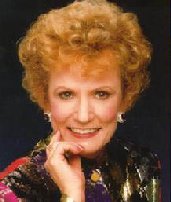 **From her earliest childhood years writing simple songs
and poems with
her father, through her twelve years as an overseas
missionary, to her present,
multi-faceted
career as an author, lyricist/songwriter and conference speaker,
Mary
has always been adept at using words to communicate her heart to
others.
She is the President of
CQK Records &
Music of Dallas, Texas, a company which creates and
produces songs in a panorama of musical styles for a
variety of audiences,
She is the host of "I Write the Songs,"
a nationally syndicated radio talk show,
especially created to
inspire and instruct the more than 40 million aspiring
songwriters in the U.S.
Mary is a frequent public speaker and seminar lecturer
and teacher of songwriting in her popular Living Room Seminars.
She is a Contributing Editor for The Internet Writing Journal
®.
**From her earliest childhood years writing simple songs
and poems with
her father, through her twelve years as an overseas
missionary, to her present,
multi-faceted
career as an author, lyricist/songwriter and conference speaker,
Mary
has always been adept at using words to communicate her heart to
others.
She is the President of
CQK Records &
Music of Dallas, Texas, a company which creates and
produces songs in a panorama of musical styles for a
variety of audiences,
She is the host of "I Write the Songs,"
a nationally syndicated radio talk show,
especially created to
inspire and instruct the more than 40 million aspiring
songwriters in the U.S.
Mary is a frequent public speaker and seminar lecturer
and teacher of songwriting in her popular Living Room Seminars.
She is a Contributing Editor for The Internet Writing Journal
®.