
Interview: Triple Cross: A Conversation With Peter Lance
by Claire E. White
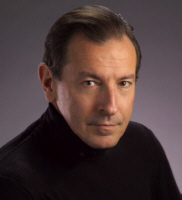 Five time Emmy award-winning investigative reporter Peter Lance has spent years
researching and writing his bestselling trilogy
about how and why the government failed to
connect the dots and prevent the terrorist attacks on 9/11 that destroyed the twin
World Trade Center towers in New York City and severely
damaged the Pentagon in Washington D.C.
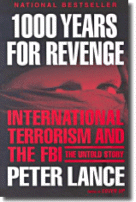
In his books, 1000 Years for Revenge: International Terrorism and the
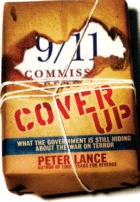
FBI--the Untold Story (Regan Books) and Cover Up: What the Government
Is Still Hiding About the War on Terror (Regan Books) Lance has boldly followed
the trail of facts wherever it led,
without regard to politics or political agendas, much to the chagrin of government
officials who have something to hide and to politicians who are only interested in 9/11
as a way to engender either fear or votes. Because of his vast knowledge on the subject of
terrorism and the FBI, Lance himself testified in secret before the 9/11 Commission.
His experience with the 9/11 Commission, his numerous interviews and the thousands of
documents he unearthed led him to discover a shocking number of critical facts which were
intentionally suppressed in the 9/11 Report, or barely mentioned in footnotes.
Five time Emmy award-winning investigative reporter Peter Lance has spent years
researching and writing his bestselling trilogy
about how and why the government failed to
connect the dots and prevent the terrorist attacks on 9/11 that destroyed the twin
World Trade Center towers in New York City and severely
damaged the Pentagon in Washington D.C.
In his books, 1000 Years for Revenge: International Terrorism and the
FBI--the Untold Story (Regan Books) and Cover Up: What the Government
Is Still Hiding About the War on Terror (Regan Books) Lance has boldly followed
the trail of facts wherever it led,
without regard to politics or political agendas, much to the chagrin of government
officials who have something to hide and to politicians who are only interested in 9/11
as a way to engender either fear or votes. Because of his vast knowledge on the subject of
terrorism and the FBI, Lance himself testified in secret before the 9/11 Commission.
His experience with the 9/11 Commission, his numerous interviews and the thousands of
documents he unearthed led him to discover a shocking number of critical facts which were
intentionally suppressed in the 9/11 Report, or barely mentioned in footnotes.
Was the cover up of the FBI's and Department of Justice's bungling to avoid embarrassment or does it have a more sinister explanation? Lance explores these and other issue in his latest book, which reveals the existence of one of the most successful double agents to operate on U.S. soil. Ali Mohamed penetrated intelligence agencies, gave classified documents to al Qaeda, smuggled numerous terrorists into the U.S. and planned the African Embassy bombings. He also trained the terror cell that blew up the World Trade Center in 1993. But somehow the Department of Justice and the FBI never caught on that their trusted informant and operative worked for bin Laden -- although the clues were there for anyone who was looking.
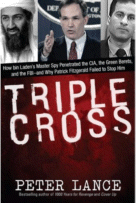
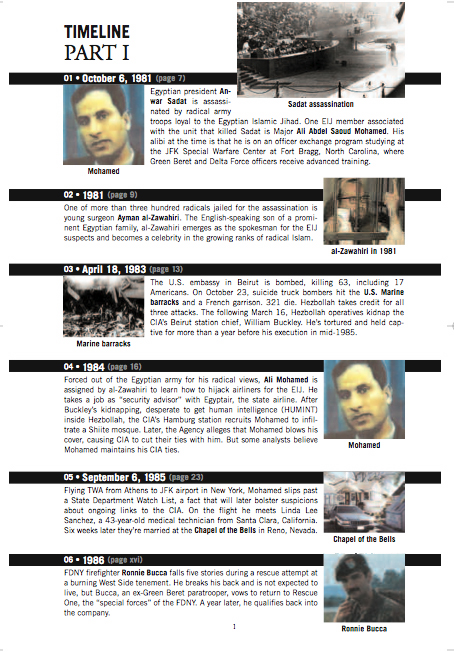
We interviewed Peter Lance for his first two 9/11 books: the interview for 1000 Years for Revenge can be found here. Peter's latest book, Triple Cross: How bin Laden's Master Spy Penetrated the CIA, the Green Berets, and the FBI and Why Patrick Fitzgerald Failed to Stop Him (Regan Books), contains the most stunning revelation yet -- that al Qaeda had a top-notch operative named Ali Mohamed who infiltrated U.S. intelligence agencies, and instead of disclosing this information to the public the U.S. government chose to intentionally bury it in a major cover up. The book also contains a fascinating, illustrated timeline about Ali Mohamed and his relation to the events leading up to 9/11. You can see part of the timeline here and you can download the full timeline from Peter Lance's website.
In this exclusive new interview, Peter talks about Ali Mohamed, the damage he caused to U.S. interests, why the FBI failed to catch him and whether or not the information he has uncovered will trigger a new investigation into the events leading up to 9/11.
This is the third book in your nonfiction series about the events leading up to 9/11 and the massive intelligence failures during that time period. What led you to focus on Ali Mohamed? How did you discover that he was the crux of the plot?
|
The 9/11 Commission Report, published in July 2004 and later nominated for a National Book Award, concluded that the original World Trade Center bombing cell was made up of a "loosely based group of Sunni Islamists"; further, that the 9/11 plot had originated not with Ramzi Yousef in Manila in 1994, as I had demonstrated, but with Yousef's uncle Khalid Shaikh Mohammed, who - according to Snell's account - merely pitched the planes-as-missiles operation to Osama bin Laden in 1996.
The evidence I'd obtained from the Philippines National Police demonstrated that the Yousef-KSM Manila cell was funded directly by bin Laden via his brother-in-law, but the Commission, with the backing of Snell and other ex-Feds, concluded that KSM wasn't even a member of al Qaeda in 1996. By mid-2004 I was getting closer to the truth. The 1996 FBI 302 memos I'd tried to share with the commission showed that the Bureau, and prosecutors from the Justice Department, had affirmatively covered up evidence of an active al Qaeda cell in New York City.
The same intelligence revealed the existence of a bin Laden-sponsored plot to hijack U.S. airliners, designed to pressure the U.S. to free the blind Sheikh and Ramzi Yousef, who was locked up in the Metropolitan Correctional Center (MCC) in Lower Manhattan.
Similar threat reporting would show up in Presidential Daily Briefings in 1998 and 2001 -- a fact that later made headlines -- but my findings revealed that the FBI had buried identical intelligence years before.
Why would America's most elite law enforcement and investigative agencies suppress such critical intel? Their motive could be traced to a most surprising quarter: organized crime. As a phone book-sized file of documentary evidence from prosecutors in the Eastern District of New York reveals FBI investigators and federal prosecutors were desperate to avoid a scandal over an alleged corrupt relationship between R. Lindley DeVecchio, a senior supervisory special agent in the Bureau's New York Office, (NYO) and a notorious hit man named Gregory Scarpa Sr., whose two-year war of succession in the Colombo crime family had left twelve people dead, including two innocent bystanders.
Through a bizarre turn of events, the Yousef evidence came from the killer's son, Greg Scarpa Jr., a junior wiseguy who happened to inhabit a jail cell adjacent to Yousef's at the MCC. But rather than risk losing a series of sixty Mafia cases in the Eastern District built on tainted evidence from Scarpa Sr., the Feds decided to bury the intel.
One of the lead prosecutors who disconnected those dots, I learned, was Patrick Fitzgerald, then the head of Organized Crime and Terrorism in New York's Southern District. Considered the Justice Department's leading authority on bin Laden, Fitzgerald would go on to become U.S. Attorney in Chicago, and special prosecutor in he ongoing investigation of media leaks regarding former CIA operative Valerie Plame, which ultimately cleared White House aide Karl Rove, while indicting Lewis "Scooter" Libby, top aide to Vice President Cheney.
Much of this tangled tale was laid out in great detail in my second investigative book Cover Up, published in September of 2004. It documented an ends/means decision by senior FBI and Justice Department officials to suppress the DeVecchio scandal, preserve those mob cases, and brand the Yousef-Scarpa Jr. intelligence a "hoax" and a "scam." Until the cover up, that intelligence -- chronicled in dozens of FBI 302s and notes from Yousef -- was considered so important to the Feds that they gave Scarpa Jr. a camera to photograph it and even set up a phony Mafia front company, the "Roma Corporation," allowing them to monitor Yousef's outside calls.
By the fall of 1996, the Bureau's internal affairs probe on DeVecchio was closed and Yousef was convicted along with Murad and a third conspirator. Dietrich Snell and Mike Garcia, the current U.S. Attorney for the SDNY, had won a decisive victory\and the Feds soon began to believe that they were winning the war against al Qaeda. But the burial of that evidence, which prevented other U.S. intelligence agencies from appreciating al Qaeda's true breadth and depth, would have shocking repercussions.
Two plus years separated Cover Up from Triple Cross. During that time as I looked back on the Justice Department's counterterrorism track record, I concluded that many of the dots left unconnected by the FBI and Department of Justice on the road to 9/11 appeared to have been the result of an intentional obscuring of the evidence.
Continuing to work sources and examine the reams of documentary evidence generated in the SDNY al Qaeda cases, I came to the conclusion that the FBI's failure to prevent the African embassy bombings in 1998, the deadly assault on U.S.S. Cole in 2000, and the 9/11 attacks themselves, went beyond gross negligence. It seemed as if a number of FBI officials and federal prosecutors at the heart of the bin Laden hunt realized that they had been outgunned for years. So they had acted affirmatively to partition the intelligence.
I believe that their motive was to sanitize the record and thus prevent the public from understanding the full depth of the FBI/Department of Justice missteps in the years leading up to September 11. So "walls" were intentionally built, and key intelligence was withheld from other agencies, including the CIA and DIA. In any other government enterprise, the consequences might have been more benign but in the realm of national security that compartmentalization of intelligence proved fatal.
By the third anniversary of 9/11, the Scarpa-Yousef evidence had been published in Cover Up. Much of it is on my website under Scarpa Jr. FBI 302's -- here.
Sixteen months later, DeVecchio would finally be arraigned on murder charges stemming, in part, from that investigation. But many unanswered questions remained. I wanted to know the names of the men and women in the shadows at Justice who had suppressed the evidence and hidden the truth behind al Qaeda all those years. I also wanted to learn why the Bush 43 Administration would act to obstruct an investigation into the destruction of the Able Danger intel, a scandal that took place during the Clinton years? It took me months of further digging before the depth of the government's deception started to become clear: Ali Mohamed was the key.
If Ali Mohamed is the key to how al Qaeda was able to pull off 9/11 why have most Americans never heard of him? Why is his name not as well known as that of, say, Mohammed Atta?
Part of the answer to that question lies in Ali's skills as a double agent and spy for al Qaeda. The other part of the answer has to do with a fierce desire by Feds like Fitzgerald to bury the Mohamed story and keep him a secret, because he ate the lunch of the FBI and Justice Department for so many years.
As I wrote in Triple Cross:
"In the years leading to the 9/11 attacks, no single agent of al Qaeda was more successful in compromising the U.S. intelligence community than a former Egyptian army captain turned CIA operative, Special Forces advisor, and FBI informant named Ali Mohamed. Spying first for the Central Intelligence Agency and later the FBI, Mohamed even succeeded in penetrating the John F. Kennedy Special Warfare Center at Fort Bragg-while simultaneously training the cell that blew up the World Trade Center in 1993. He went on to train Osama bin Laden's personal bodyguard, and photographed the U.S. embassy in Kenya taking the surveillance pictures bin Laden himself used to target the suicide truck bomb that killed 224 and injured thousands there in 1998.
"Mohamed accomplished all that fully nine years after the FBI first photographed the cell he trained using automatic weapons at a firing range on Long Island. He lived the quiet life of a Silicon Valley computer executive while slipping off to Afghanistan and the Sudan to train some of al Qaeda's most lethal terrorists in bomb-making and assassination tradecraft. He was so trusted by bin Laden that Ali was given the job of moving the Saudi "Emir" from Afghanistan to Khartoum in 1991 and then back to Jalalabad in 1996-much of that time maintaining his status as an FBI informant who worked his Bureau control agent like a mole.
"In the years leading to the 9/11 attacks, no single agent of al Qaeda was more successful in compromising the U.S. intelligence community than a former Egyptian army captain turned CIA operative, Special Forces advisor, and FBI informant named Ali Mohamed.
"Spying first for the Central Intelligence Agency and later the FBI, Mohamed even succeeded in penetrating the John F. Kennedy Special Warfare Center at Fort Bragg -- while simultaneously training the cell that blew up the World Trade Center in 1993. He went on to train Osama bin Laden's personal bodyguard, and photographed the U.S. embassy in Kenya taking the surveillance pictures bin Laden himself used to target the suicide truck bomb that killed 224 and injured thousands there in 1998.
"Mohamed accomplished all that fully nine years after the FBI first photographed the cell he trained using automatic weapons at a firing range on Long Island. He lived the quiet life of a Silicon Valley computer executive while slipping off to Afghanistan and the Sudan to train some of al Qaeda's most lethal terrorists in bomb-making and assassination tradecraft. He was so trusted by bin Laden that Ali was given the job of moving the Saudi "Emir" from Afghanistan to Khartoum in 1991 and then back to Jalalabad in 1996-much of that time maintaining his status as an FBI informant who worked his Bureau control agent like a mole.
"Mohamed twice played host to al Qaeda's second-in-command, Dr. Ayman al-Zawahiri, who traveled to the U.S. in the 1990s to raise money for the Jihad. He used his Army vacation to hunt down elite Soviet Spetsnaz commandos in Afghanistan, and later toyed with gullible special agents in New York and San Francisco while he learned the inner workings of the FBI's al Qaeda playbook.
"In the annals of espionage, few men have moved in an out of the deep black world between the hunters and the hunted with as much audacity as Ali Mohamed-known to his al Qaeda brothers as Ali Amiriki, or "Ali the American." A deep-penetration al Qaeda sleeper, he succeeded as a triple agent, gaining access to the most sensitive intelligence in the U.S. counter-terrorism arsenal.
"Next to Ramzi Yousef, the bomb maker who plotted both attacks on The Twin Towers, Mohamed remains the greatest enigma in the war on terror. Brazenly slipping past watch lists, he moved in and out of the U.S. with impunity for years, marrying an American woman, becoming a naturalized citizen, seeking top secret security clearance from a Silicon Valley defense contractor and working for the FBI while servicing the top echelons of al Qaeda.
"The story of Ali Mohamed holds the key to the full truth about how bin Laden planned, financed, and executed the 9/11 attacks. He's also a living witness to how the best and the brightest in the U.S. intelligence community were repeatedly outflanked for two decades, from the death of Egyptian president Anwar Sadat in 1981 through the attacks of September 11, 2001.
"My conclusion in Cover Up was that the FBI had buried key al Qaeda intelligence to avoid a scandal over tainted Mafia evidence. But as unbelievable as that story seemed, the investigation took on even stranger twists and turns when Ali Mohamed came into focus.
"For example, almost from the moment the Bureau "opened" him as an informant back in 1992, Ali's main control agent on the West Coast became embroiled in a grisly triple murder case that distracted him from fully appreciating Mohamed's lethal dedication to stealing America's secrets for the jihad. Patrick Fitzgerald himself called Ali "the most dangerous man I ever met," and soon, as I began to fill in the blanks on him, I encountered evidence more astonishing than any fiction I had ever written.
Where is Ali Mohamed now? Why in the world would our government allow such a dangerous man to cut a plea deal and escape the death penalty?
Ali is in some form of custodial witness protection. After arresting him more than a month after the East African embassy bombings which killed 224 and injured thousands in Kenya and Tanzania, Fitzgerald held Ali on a John Doe warrant for nine months in the same M.C.C. (federal jail in Lower Manhattan) where Ramzi Yousef and Greg Scarpa Jr. had been housed. They negotiated with him for more than 2 years before cutting a deal with him that allowed Mohamed to escape the death penalty.
Arguably he should have been the primary defendant in U.S. vs. bin Laden, the Embassy bombing trial which Fitzgerald prosecuted beginning in February, 2001. Having cut a deal with him the Feds should then have used him to testify since, under an exception to the Rule Against Hearsay for co-conspirator testimony he could have told the jury how he'd personally shown his surveillance pictures of the Kenya embassy to bin Laden in 1994 and bin Laden had pointed to exactly where he wanted the suicide truck bomb to go.
But Fitzgerald kept him off the stand he has never testified. In fact, I learned that six years after pleading guilty to crimes that would have ended many other suspects lives via lethal injection, he has never been sentenced for his crimes.
Why? My feeling -- and it was endorsed by various defense lawyers interviewed, was that the Feds will NEVER allow Ali to see the light of day in a courtroom because if he gets on the stand, these defense attorneys will peel back the layers and reveal the shocking details of how he snookered the Feds for so many years.
Your book and your research raises a lot of questions about the conclusions made by the 9/11 Commission Report. Do you think the investigation into 9/11 should be re-opened? How likely do you think it is that these issues will ever be reexamined by another congressional committee?
|
Their report reduced to a footnote, details of the three major war games being conducted on 9/11, including an exercise by the Northeast Air Defense Sector of NORAD that initially confused officials charged with protecting New York.
Worse, it ignored a remarkable account cited earlier by the Commission's own chairman, Thomas Kean, that F-16s from his home state of New Jersey were moments away from Lower Manhattan but never called by NORAD to interdict the Twin Towers attack.
I took me a book of 670 pages with 50 pages of end notes and 30 pages of Appendices to tell Ali Mohamed's story but in the entire 9/11 report, this is all they had to say about him in the body of the book:
The Embassy Bombings As early as December 1993, a team of al Qaeda operatives had begun casing targets in Nairobi for future attacks. It was led by Ali Mohamed, a former Egyptian army officer who had moved to the United States in the mid-1980s, enlisted in the U.S.Army, and became an instructor at Fort Bragg. He had provided guidance and training to extremists at the Farouq mosque in Brooklyn, including some who were subsequently convicted in the February 1993 attack on the World Trade Center. The casing team also included a computer expert whose write-ups were reviewed by al Qaeda leaders. (Paragraph 356 on page 67).There were two other footnotes that reference Ali:
85. On the surveillance reports and the Hezbollah training camps, see FBI report of investigation, interview of confidential source, Sept. 16, 1999; see also Intelligence report,al Qaeda Targeting Study of U.S. Embassy Nairobi, prepared 23 December 1993, Apr. 5, 1999; Intelligence report, Establishment of a Tripartite Agreement Among Usama Bin Ladin, Iran, and the NIF, Jan. 31, 1997; Intelligence report, Cooperation Among Usama Bin Ladin's Islamic Army, Iran, and the NIF, Jan. 31 1997; FBI report of investigation, interview of Fadl, Nov. 10, 1996. Bin Ladin told his operatives he wanted them to study Hezbollah's 1983 truck bombing of U.S. marines in Lebanon that killed 241 and led to the American pullout from Lebanon. See, e.g., statement of Ali Mohamed in support of change of plea, United States v. Ali Mohamed, No. S(7) 98 Cr. 1023 (S.D. N.Y.), Oct. 20, 2000 (transcript p. 30); trial testimony of Fadl, United States v. bin Laden , Feb. 6, 2001 (transcript pp. 292-293); FBI report of investigation, interview of Fadl, Mar. 10, 1997; FBI report of investigation. Paragraph #2421 p. 470.
[sic] government's interest in them. In February 1995, the government filed a confidential court document listing Usama Bin Ladin and scores of other people as possible co-conspirators in the New York City landmarks plot. Ali Mohamed, who was on the list, obtained a copy and faxed it to a close Bin Ladin aide for distribution. Statement of Ali Mohamed in support of change of plea, United States v.Ali Mohamed, No. S(7) 98 Cr. 1023 (S.D. N.Y.), Oct. 20, 2000 (transcript p. 29); Statements of Prosecutor and Judge, United States v. Bin Laden, No. S(7) 98 Cr. 1023 (S.D. N.Y.), Mar. 26, 2001 (transcript pp. 3338-3339); Patrick Fitzgerald interview (Jan. 28, 2004). Paragraph #2439. P. 472.
Another of my startling revelations in Triple Cross -- first reported by John Berger on www.intelwire.com is that bin Laden's brother in law Mohammed Jamal Khalifa, the bagman behind the Yousef/KSM Manila cell was captured in December 1994 in Morgan Hills, California the hometown of Ali Mohamed's control agent John Zent. He was believed by at least one terrorism expert to be heading to a meeting with Ali Mohamed.
Khalifa had on him when seized a Newtown PDA which was a treasure trove of evidence linking him to both of Yousef's cells (in N.Y. and Manila). He had a death sentence hanging over his head in Jordan for a series of al Qaeda related theater bombings. Philip C. Wilcox, a senior advisor at the State Department described Khalifa as having "engaged in serious terrorist offenses" and noted that his release would "engage U.S. national security." His letter is Appendix III in Triple Cross on page 548.
And yet, as reported in the book, at the behest of Secretary of State Warren Christopher, Jamie Gorelick -- then Deputy Attorney General -- pushed for Khalifa's extradition to Jordan. Eventually he was freed from U.S. custody and, after a witness in the bombing case had recanted, his sentenced was suspended and he was in the wind. < Not a word of that catastrophic intelligence loss was found in the 9/11 Commission Report because Jamie Gorelick was one of the ten commissioners.
Can we say "Foxes guarding the chicken coop?"
My hope is that there will be sufficient outrage generated by the findings in Triple Cross to prompt a new investigation of 9/11. But this investigation should be staffed by American citizens, victim's family members, scholars and journalists, instead of what happened the first time around: half of the 75 staff members were alumni of the same agencies they were charged with investigation: the CIA, the FBI, the NSA, etc. There wasn't a word of accountability in the report. No one was blamed.
Triple Cross names names and focuses the laser beam of accountability on a series of former and current Department of Justice and FBI officials.
Patrick Fitzgerald is best known to Americans as the prosecutor in the stalled Valerie Plame leak investigation, in which Karl Rove escaped indictment. Is it unusual for one person to be involved in so many high-profile, yet totally different types of investigations? His story has this Forrest Gump-like quality to it: if there was a big, politically charged case, he seems to show up in the middle of it. Who did/does Fitzgerald answer to? And why do you think he wouldn't talk to you in connection with this book?
Fitzgerald ultimately answers to the Attorney General and the President. It's interesting that you describe him as a kind of "Forrest Gump" because Ali Mohamed was his equivalent on the al Qaeda side -- showing up or having a hand in some of the most important bin Laden/al-Zawahiri plots from the WTC bombing in 1993 through the Embassy bombing in 1998.
This is some of what I report on Fitzgerald, aka "Fitzie," in Triple Cross: In early 1996, almost three years after the WTC bombing, the Clinton administration began to focus its response to the "jihad army" whose members had been convicted the previous October.
In the middle of the Day of Terror trial, the president had signed Presidential Decision Directive 39, a secret order designed to "deter, defeat and respond vigorously to all terrorist attacks." The PDD tasked the CIA to take "an aggressive program of foreign intelligence collection, analysis, counterintelligence and covert action" -- authorizing the "return of suspects by force, without the cooperation of host government(s)" if necessary. The FBI was charged as lead U.S. agency to reduce the nation's security vulnerabilities. Though the unclassified version of the PDD is heavily redacted, it's clear that Osama bin Laden soon became a principal target.
Before January was over, the CIA had created "Alec Station," the first "virtual" office that focused on a specific individual (as opposed to a country). Formally known as "the bin Laden issue station," it was initially staffed by sixteen analysts and located in an office park a few miles from the headquarters at Langley.
It was run by Michael Scheuer, by then a fourteen-year veteran of the Agency. Scheuer named the station "Alec" after his son. The FBI representative from the NYO at the station was Dan Coleman, who soon developed such an expertise on al Qaeda he was nicknamed "the professor." In order to work the station, Coleman had to submit to a polygraph and get a series of new clearances that would allow him to gain access to the CIA's Hercules database system.
At the same time, the two bin Laden "offices of origin" in New York, the SDNY and the FBI's NYO, dedicated an existing unit, "Squad I-49," to building a case against the Saudi billionaire. Coleman became a key component, along with Special Agent Jack Cloonan. Patrick Fitzgerald, the AUSA who was the "second seat" to Andrew McCarthy in the Day of Terror trial, had since become chief of the Organized Crime-Terrorism Unit in the SDNY. He was effectively tasked to direct the squad as lead prosecutor.
It would be a career-making position for Fitzgerald, the Harvard-educated son of Irish immigrants. In years to come he would emerge as the DOJ's leading bin Laden authority, described in a February 2006 Vanity Fair profile as a man with "scary smart intelligence," an "uncanny memory," and "a mainframe computer brain."
As lead prosecutor in United States v. bin Laden, the African Embassy bombing case in 2001, Fitzgerald would be rewarded for his conviction of the Saudi billionaire in absentia with an appointment as U.S. attorney for the Northern District of Illinois -- becoming the top Fed in Chicago, a city infamous for political corruption. With a staff of 161 AUSAs, Fitzgerald, whose close friends called him "Fitzie," would oversee Operation Safe Road, a public corruption case that would result in the conviction of seventy-three defendants, including thirty public employees and officials.
If that wasn't enough to keep him busy, by December 2003 Fitzgerald would be tapped by George W. Bush's Justice Department as special prosecutor in the Valerie Plame CIA leak investigation. It would be his job, in essence, to determine whether presidential aide Karl Rove, one of the most powerful men in Washington, had leaked the name of former CIA covert operative Valerie Plame in an effort to punish her husband, for writing an op-ed page piece critical of the Bush White House for using false intelligence to justify the invasion of Iraq.
In any serious investigation of how the FBI and DOJ failed to detect Ali Mohamed as an al Qaeda spy before the Embassy bombings he helped to execute, an examination of Fitzgerald's awareness of bin Laden's trajectory is crucial.
Both Coleman and Fitzgerald declined to be interviewed for the book, but Fitzgerald granted an extensive interview in 2005 for the National Geographic Channel's four-hour documentary Inside 9/11. I obtained a copy of the interview transcript, in which Fitzgerald discussed his first awakening to al Qaeda and its terror chief:
"I didn't know the word al Qaeda when we were prosecuting people in '93, '94, and '95," Fitzgerald said. "And then this elusive figure came to the attention of the American government called Osama bin Laden. And I remember early in 1996 we were all trying to figure out, was Osama bin Laden as bad as people were saying in the national security community? Because he seemed to be coming up everywhere. He was like Elvis. Every time you read about a terrorist group in a different country carrying out violent action, you heard the name Osama bin Laden and you wondered whether it was just sort of a fictional person. Was he a wealthy benefactor of people who were fighting oppression in different countries, [or] did bin Laden know precisely what these people were doing?"
Desperate to answer those questions, Fitzgerald's bin Laden squad began operating on "two parallel tracks," according to Cloonan. "One [track] was intelligence driven to support the activity that Alec Station was doing ... which would include disruptions, and in some instances, renditions and working with a number of services overseas. The other [track] was on the criminal side."
That structure indicates that little more than ten months after the issuance of Jamie Gorelick's "wall memo," Fitzgerald and company were apparently disregarding her mandate that criminal investigation should be segregated from intelligence threat prevention. Squad I-49 in the FBI's NYO was actively working both jobs.
That reality becomes important as we assess Fitzgerald's performance. Why? Because years later, when investigators began trying to suss out what went wrong, Fitzgerald would pointedly blame "the wall" for the apparent inability of the SDNY and the FBI to prevent the 9/11 attacks.
Despite Fitzgerald's 2005 assertion that he "didn't know the word al Qaeda" in 1995, Special Agent John Zent had conducted that interview with Ali Mohamed in 1993, two years before that, in which the spy confessed that "Bin Laden ran an organization called al Qaeda and was building an army which may be used to overthrow the Saudi Government."
How do we know that? It was documented in a sworn 1998 affidavit written by Special Agent Dan Coleman, one of Fitzgerald's key operatives.
Even Jack Cloonan admitted to me that "Ali Mohamed was a well-known entity by 1996 because of his involvement with some of the people in the first Trade Center case. He was an unindicted co-conspirator."
"The Osama bin Laden case opened up in 1996," he says, "And, out of that case, there were a number of sub files that were created." One of them was on Ali Mohamed. "This was a classified case, and then the focus of the case changed because [Attorney General] Janet Reno and the U.S. attorney at the time, Mary Jo White, said that the Bureau and the Southern District -- on the advice of Justice -- were going to build a prosecutable case against bin Laden." Cloonan says that he first became aware of Ali Mohamed himself when he began working on the squad in January.
It appears that many people have tried to silence you on this project. When National Geographic made a film from the facts in the book, much of the more incendiary material was excised. Who is trying to keep these facts secret, and why?
|
One of the most telling examples is how they used only half of Fitzgerald's now famous quote to FBI agent Jack Cloonan after his face to face meeting with Ali Mohamed in October, 1997. This is the full quote as contained in a transcript of Cloonan's videotaped interview for the Nat Geographic documentary entitled Triple Cross on June 1st, 2006:
"Ali Mohamed is the most dangerous man I have ever met. We cannot let this man out on the street."This is the quote they used in the documentary that aired on August 28th:
"Ali Mohamed is the most dangerous man I have ever met."They cut out the second half of the quote relieving Fitzgerald and Cloonan from any negligence since they FAILED to get Ali off the street for another 10 months until the bombs went off in the very Embassy plot that Ali had plotted since 1993.
Any of your readers who saw that documentary and were shocked at Ali Mohamed's story needs to read Triple Cross. Anyone of your readers who found The Looming Tower compelling needs to read Triple Cross -- because as great a writer as Lawrence Wright of the New Yorker is, he accepts the word of FBI agents like Cloonan and Dan Coleman as gospel without ever challenging them.
Wright has more than a dozen references to Mohammed Jamal Khalifa in The Looming Tower. He even interviewed him. But there isn't a word in the book about Jamie Gorelick's catastrophic move to push MJK out of the country.
I can say proudly that if you want the fullest account to date of the failures of the FBI and Department of Justice to prevent the 9/11 attacks, you should order Triple Cross. If nothing else, go to my website www.peterlance.com and download that 32 page timeline. If you read it and it doesn't compel you to read the entire book, then I promise to start writing children's literature after this. (smiling)
Timeline
More from Writers Write
Stephen King Quotes
quotes from the master
quotes from the master
Grammar Tips
improve your writing
improve your writing
Writing Prompts
spark your creativity
spark your creativity