
Rhyme or Reason -- Part 1
by Mary Dawson
Rhyme! It’s one of the most powerful tools in the songwriter’s toolkit, and there are many reasons for it.The first and most basic reason is simply that rhyme helps us humans to remember things, From our earliest childhood we find that it’s easier to learn something if it rhymes. Remember little ditties like this one...?
One...two -- Buckle my shoeOr consider this amazing bit of trivia:
Three...four -- Shut the door
Five...six -- Pick up sticks
Seven...eight -- Lay them straight
Nine..ten -- A Big Fat Hen
Police officers who test motorists suspected of DUI have reported that when asked to recite the alphabet, intoxicated drivers have trouble remembering the sequence of letters unless they sing the alphabet using the familiar children’s rhyme:
ABCDEFGBecause of its amazing power to imprint words and concepts on the mind, Rhyme is a resource that songwriters must study in depth and use wisely. Over the next several articles we will explore the subject of Rhyme, how it has evolved and changed over the years, and how we can use this powerful tool to craft better songs ourselves.
HIJK -- LMNOP
QRS and TUV
WX
Y and Z
Now I’ve said my ABC’s
Next time sing along with me
Before we delve into the mystery and history of rhyme (we obsessive compulsive rhymers can't stop even when writing prose) we need to establish a few common denominators and definitions.
Rhymes at the Bottom Line
At its most basic level Rhyme can be defined by the following qualifications:
Two or more words which have...Examples: mate, plate, date
- the same final accented vowel
- the same final consonant sound
- different consonants preceding the vowel
Rhymes are called Perfect Rhymes if the stressed vowel and ending consonant are exactly the same. If the rhyming words are one-syllable words like those above -- they are called Single or Masculine Rhymes.
When the rhyming words have two matching final syllables, they are called Double or Feminine Rhymes. Even if the words have different numbers of syllables, they still qualify as Feminine Rhymes as long as the last two syllables match exactly. For example, you might rhyme:
static with attic (both two-syllable words)But you could also rhyme:
static (two syllables) with traumatic (three syllables) or democratic (four syllables)Notice that these words have differing numbers of syllables, but the last two syllables of each word are exact matches and are therefore Double or Feminine Rhymes.
Triple Rhymes are words which have three matching final syllables. As with Double or Feminine Rhymes, Triple rhyming words may have varying numbers of syllables as long as the last three syllables match exactly as in:
clarity and charity (both three-syllable words)--or--
clarity (three syllables), disparity (four syllables), and regularity (five syllables)Words can also be said to rhyme perfectly if they are spelled differently but have the same ending vowel sound like...
grew and true
fate and eight
Rhymes Evolution and Revolution
For most of the first half of the Twentieth Century, Perfect Rhymes were the "gold standard" for songwriters. Most of the hits crafted in Tin Pan Alley from the 1920's to the 1950's were written in the AABA or AABC song forms for theater or films. The great lyricists of the day were consummate craftsmen witty, clever and sophisticated and far too polished to ever allow themselves to use anything but Perfect Rhymes! Wordsmiths like Gus Kahn, Irving Berlin, Yip Harburg, Lorenz Hart and Ira Gershwin lifted the bar of rhyming excellence to an all-time high and together with their musical collaborators created songs that are still being recorded and re-recorded today. Using single, double and triple rhymes and creative vocabularies, these rhyming geniuses defined the meaning of creativity as they "massaged" ordinary words into unforgettable lyrics.
Every aspiring songwriter owes it to him/herself to study these masters. Today there are websites dedicated to lyrics of all the "greats." It's well worth the time invested to search them out and study them in depth. It's also invaluable to invest in recordings of these amazing writers. Become familiar with their hits and watch for the "gems" of craftsmanship that appear again and again. Some of my personal favorites (and perhaps a good starting place for your study) are:
"My Heart Stood Still" – Lorenz Hart
"Putting On the Ritz" – Irving Berlin
"Embraceable You" – Ira Gershwin
"Mountain Greenery" – Lorenz Hart
"September in the Rain" – Al Dubin
"I'll See You in My Dreams" – Gus Kahn
"Somewhere Over the Rainbow" – Yip Harburg
While it is never completely clear to me as to whether art imitates life or life imitates art, one thing is certain: As the stable and peaceful 1950's gave way to the turbulent 1960's, American society began to undergo some very radical changes. Issues like the Civil Rights Movement, the Viet Nam War and other serious matters began to dominate American consciousness.
Enter Bob Dylan!
Perhaps no one songwriter in any generation has had such a profound influence on music as an art form -- or on culture as a whole -- as this scraggly, unrefined, enigmatic folk singer/songwriter. This angry young man had far more important human issues to address than making "perfect rhymes" and clever lines to amuse theater-goers. The message of the song was now paramount and communication became far more important than sophistication.
Besides, no matter how fastidious a lyricist might be, there are only so many Perfect Rhymes to be had. After a while they become overused and clichéd. Like a painter who only uses primary colors and never mixes his paints to create new shades, lyricists became tired of using the same worn out options. Master songwriter, Jimmy Webb1, summarizes the problem quite succinctly:
The consistent use of overly familiar language in line after line nudges the writer inexorably toward cliché. Why so? Because generations of industrious rhymers have already applied themselves to wringing out the possibilities of such standbys as "love-dove-above" -– "heart-start apart" -– and "eyes-cries-tries." The cliché is waiting in the tired rhyme with a Cheshire cat grin.
Bob Dylan's 1964 hit, "The Times They Are a-Changing," was not only a philosophical observation about the state of the union, but also an artistic departure from the clever, urbane word techniques of Tin Pan Alley. His "wake-up-America lyrics" certainly rhymed, but they did not rhyme perfectly. Dylan allowed himself rhymes like roam with grown -- or pen with again and spin. His Double or Feminine Rhymes linked the word changing (the key word in the hook/title) to other words with the same stressed long vowel sound, but different ending consonants -- words like saving, naming, raging. They weren't Perfect ... but they were fresh and they worked!
And, of course, Dylan's entrance set the stage for all kinds of other folk-rock artists of the era -- artists like Janis Ian, Joan Baez, Joni Mitchell and many others. Like the "flower children" of that generation, their emphasis turned from sophistication and wittiness to naturalness, honesty and authenticity. By the time the 1960's were in full swing, both lyricists and listeners were becoming comfortable with the use of Near Rhymes in the songs they loved.
Today, Near Rhymes are accepted and even preferred by hit songwriters. Lyricists have discovered that if you start "mixing the primary colors" you can create all kinds of interesting shades of meaning and emotion. Come back next time and we'll examine the craft of Near Rhyme and unlock some of its amazing possibilities!
Jimmy Webb, Tunesmith, p.54
Continue on to Rhyme or Reason Part 2.
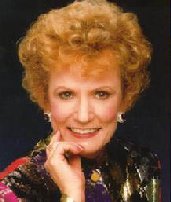 **From her earliest childhood years writing simple songs and poems with her father, through her twelve years as an overseas missionary, to her present, multi-faceted career as an author, lyricist/songwriter and conference speaker, Mary has always been adept at using words to communicate her heart to others. She is the President of CQK Records & Music of Dallas, Texas, a company which creates and produces songs in a panorama of musical styles for a variety of audiences, She is also the host of "I Write the Songs," a nationally syndicated radio talk show, especially created to inspire and instruct the more than 25 million aspiring songwriters in the U.S. "I Write the Songs" is broadcast over the Internet. Mary is a frequent public speaker and seminar lecturer on songwriting. She is a regular columnist for Independent Songwriter Web Magazine. Mary's commitment to discovering and mentoring talented new songwriters has given her extensive experience in song analysis through adjudicating songwriting competitions and conducting songwriting workshops across the country and around the world. Because of her role as president of an independent music company, she is also well qualified to instruct aspiring songwriters on the various
business aspects of the music industry. She is married and a mother of four. She resides in the Dallas area.
**From her earliest childhood years writing simple songs and poems with her father, through her twelve years as an overseas missionary, to her present, multi-faceted career as an author, lyricist/songwriter and conference speaker, Mary has always been adept at using words to communicate her heart to others. She is the President of CQK Records & Music of Dallas, Texas, a company which creates and produces songs in a panorama of musical styles for a variety of audiences, She is also the host of "I Write the Songs," a nationally syndicated radio talk show, especially created to inspire and instruct the more than 25 million aspiring songwriters in the U.S. "I Write the Songs" is broadcast over the Internet. Mary is a frequent public speaker and seminar lecturer on songwriting. She is a regular columnist for Independent Songwriter Web Magazine. Mary's commitment to discovering and mentoring talented new songwriters has given her extensive experience in song analysis through adjudicating songwriting competitions and conducting songwriting workshops across the country and around the world. Because of her role as president of an independent music company, she is also well qualified to instruct aspiring songwriters on the various
business aspects of the music industry. She is married and a mother of four. She resides in the Dallas area.
quotes from the master
improve your writing
spark your creativity